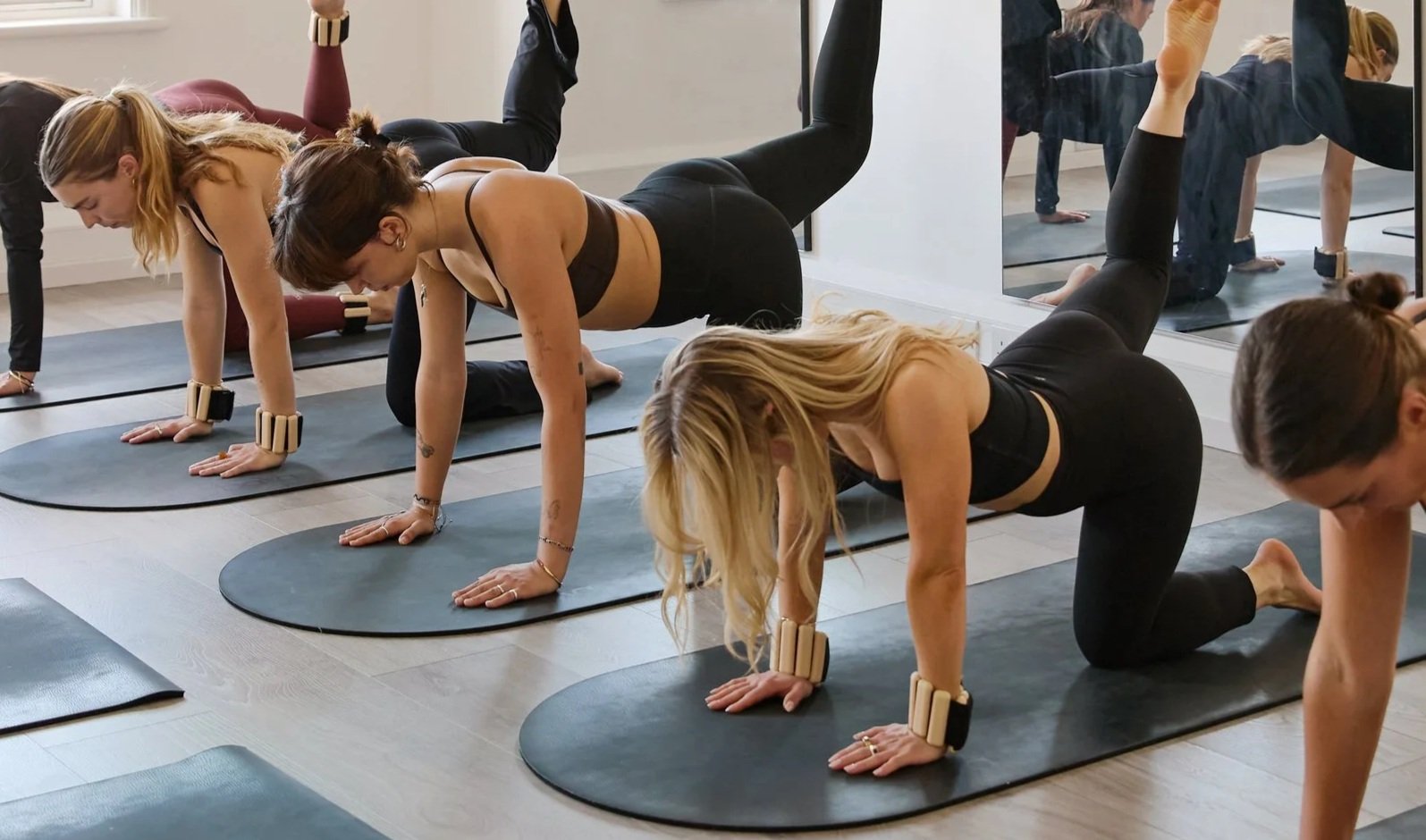
If reformer is getting easy, try mat pilates
Go on, read it again. I promise I haven’t muddled my words.
There is an incorrect but widely held belief that reformer Pilates is harder than mat. People assume that by stepping onto the big, bad reformer bed they are ascending to new fitness heights. And who could blame them? Reformers look impressive. All that wood and fake leather. All those coloured springs. All lined up next to one another like a little army. The humble mat never stood a chance.
Yet Joseph Pilates didn’t invent the reformer to make his method harder. It was never intended to be an advanced option or the next step. Rather, it was a rehabilitation tool to make Pilates possible for those who found mat Pilates too demanding I’m talking about injured WW2 soldiers and bed-bound patients who were unable to support their own body weight. Pilates realised that springs and pulleys could reduce the impact of gravity and a client’s own body weight. The client could then move their joints and train their muscles from bed, without the risk of falling. Movement became possible far earlier in recovery, which was important for improving blood circulation and preventing muscle wastage.
That’s right. You heard me. Mat Pilates was designed to challenge strong bodies. The reformer on the other hand was intended to help weaker bodies find strength.
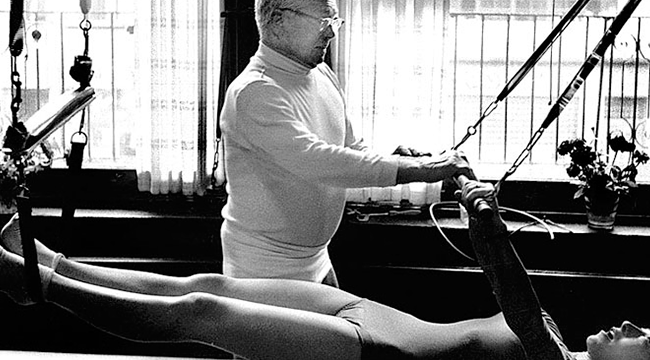
Fast forward a century and the origins of the reformer have been forgotten. Somewhere along the way, heavy springs and tight pulleys have become synonymous with a harder workout. But the maths isn’t mathing. Sure, tight springs might make it harder to ‘push’ the carriage away with your arms and legs. But the added resistance and tactile feedback of the bar actually make the movement easier for your core by bearing more of the weight of the limbs.
Put simply, the reformer brings the workout into the limbs (as it was intended to do). Whereas mat Pilates keeps the workout in the core. Of course, resistance training your arms and legs is great. It just isn’t what the original Pilates method was about.
Mat Pilates is brutally honest. There is nowhere to hide on the mat. There is nothing to reduce the impact of gravity and body weight. There is no head rest and foot bar to guide you in correct alignment (and keep you there). There is no tactile feedback to help you execute exercises properly. There are no lengthy breathers to change the springs and relocate the box. On the mat, it’s just you and your body awareness and your breath. Your core has to come to the party. If it doesn’t, you fail and you fall.
Am I saying that reformer is redundant? Of course not. I’m a big believer that the best kind of movement is the one that you enjoy. If you love the reformer, I’ll hand you your grippy socks and leave you to it. If you’re injured, I’ll even encourage you to take reformer classes so that you can build strength and one day master the mat.
My goal is simply to let you know that reformer is not the toughest kid on the block. He’s bad, sure. But mat? Well, she’s the baddest.