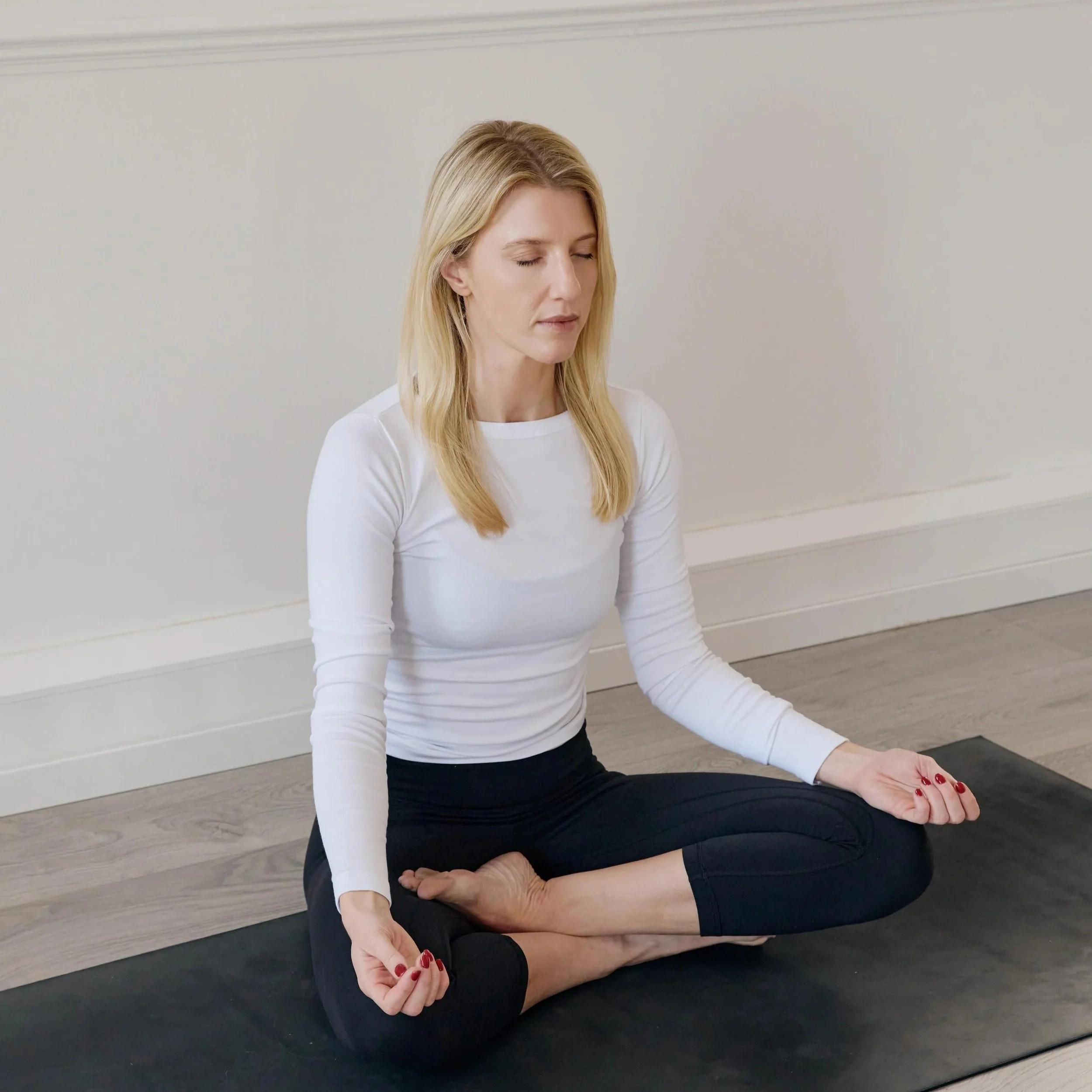
You’re not crazy, you’re just dysregulated
Raise your left hand if you still feel tired after a full night’s sleep.
Raise your right hand if you get irritated and overwhelmed by small things.
Now, keep both hands up if you also experience racing thoughts, brain fog, anxiety, poor focus, poor sleep, gut issues, body tension and/or a quick temper.
If your hands are still resting smugly by your side, I suggest you scroll on. You are God’s special favourite and this article isn’t for you.
However, if your arms are stretching high above your head, I suggest you settle in with a cup of tea. We’ve got something important to discuss, and that something is nervous system dysregulation.
Now I know what you’re thinking. “Emma, I don’t have a dysregulated nervous system... whatever the hell that is. I just have [bad periods] [a stressful job] [ignorant flatmates] [terrible luck dating] [terrible luck generally] [Long Covid] [a hangover]... oh, and I’m hypersensitive.”
Well, maybe. But you also might be experiencing the effects of a nervous system that is under strain.
Pause for a moment while I dust off my neuroscience degree: the nervous system is responsible for communicating information between the brain and the rest of the body. It receives information from our senses and internal organs, processes it and sends signals back out to the body, helping to coordinate everything from movement and sensation to breathing, heart rate and digestion.
When we’re under prolonged stress, these systems can become less flexible in how they respond to the demands placed on them. Our bodies are designed to move between states of activation and rest, but chronic stress, poor sleep and other pressures can make it harder to switch off the stress response. This can show up in all sorts of physical and psychological ways, including exhaustion, irritability, muscle tension, digestive problems, poor sleep and difficulty concentrating.
So what causes this imbalance? Well, it differs from person to person. It might be chronic stress, persistent lack of sleep, burnout or trauma. It can also occur alongside mental health conditions such as anxiety or depression. And, importantly, symptoms like these can have many different causes, so experiencing them doesn’t necessarily mean that your nervous system is “dysregulated”.
Now, I’m not asking you to declare yourself dysregulated. But awareness that your nervous system might be under strain is useful. Without it, you might be inclined to blame the way you feel entirely on something outside of your control. This can leave you feeling hopeless and defeated, as though you’re destined to live your life stuck in survival mode.
And when you don’t believe things can improve, you’re much less likely to try to make them better.
On the other hand, understanding the relationship between stress, the nervous system and the way we feel can be empowering. Because while we can’t control everything that happens to us, there are things we can do to support our ability to respond to stress and return to a more settled state.
I want you to get a piece of paper, or open up the Notes app, and jot down whether you regularly experience any of the following: tiredness after a full night’s sleep, irritability and overwhelm over small things, racing thoughts, brain fog, anxiety, poor focus, poor sleep, gut issues, body tension and/or a quick temper.
If several of these sound familiar, it might be worth looking at the habits and circumstances that could be contributing to how you feel - from sleep and stress levels to movement, rest and how often you actually give yourself time to switch off.
Luckily, many of the tools that can support this are free: breathing techniques, mindful movement, grounding, prioritising rest and social connection, to name just a few. We’ll dive deeper into these in another article on another day in the near future.
This quarter, both in the studio and online, learning to regulate will be our focus. After all, it’s the fourth pillar of the Breathe Method and arguably the most defining feature of our unique approach to Pilates.
By December, my mission is to ensure that each and every one of my clients has embarked on the journey of learning how to regulate their own nervous system - not by trying to eliminate stress or stay calm all the time, but by becoming more aware of what they need and learning tools that help them move between activation and rest.
It’s a lifelong journey, one of challenging terrain and occasional wrong turns, but an essential one nonetheless.
See you on the mat!
Emma x